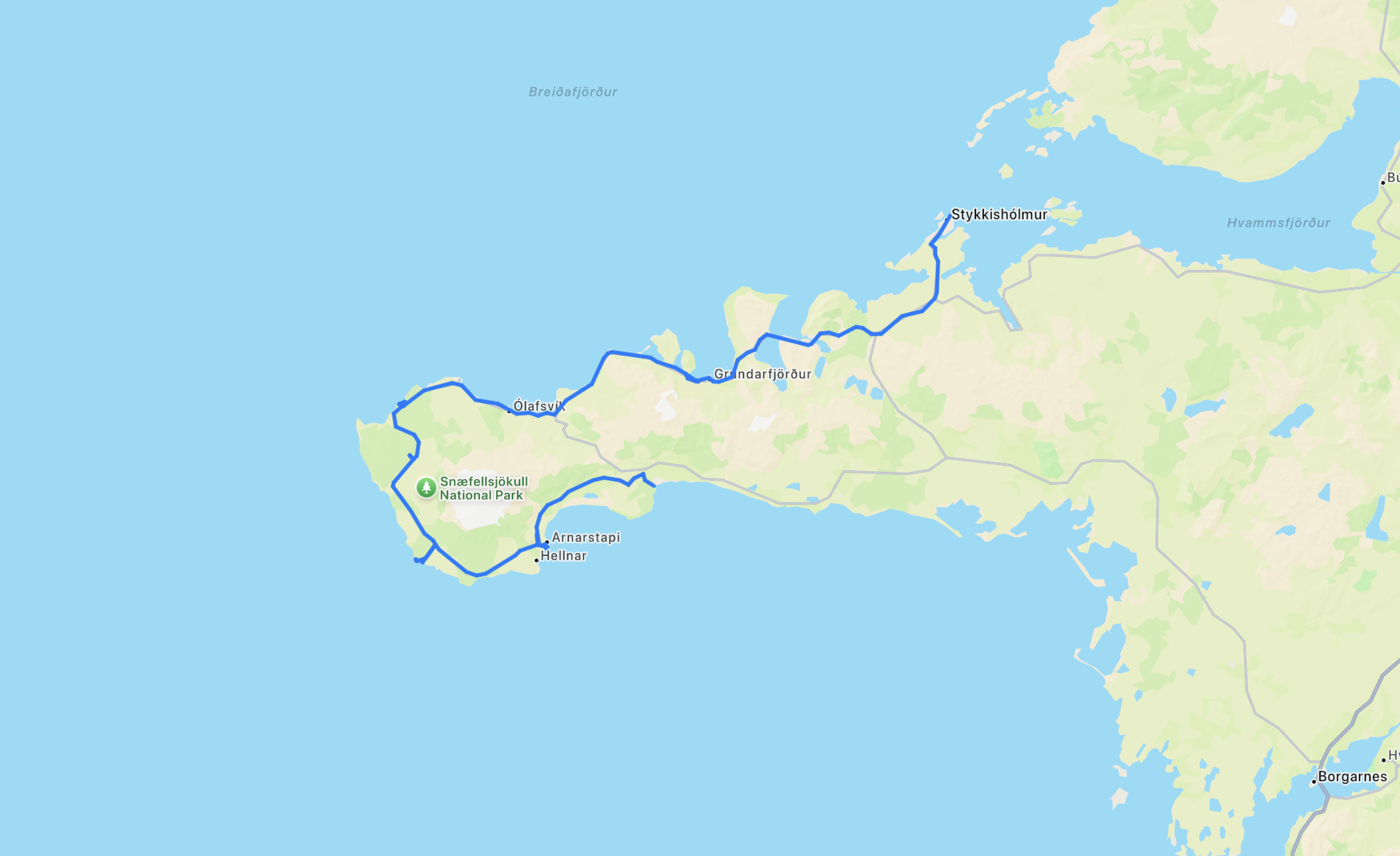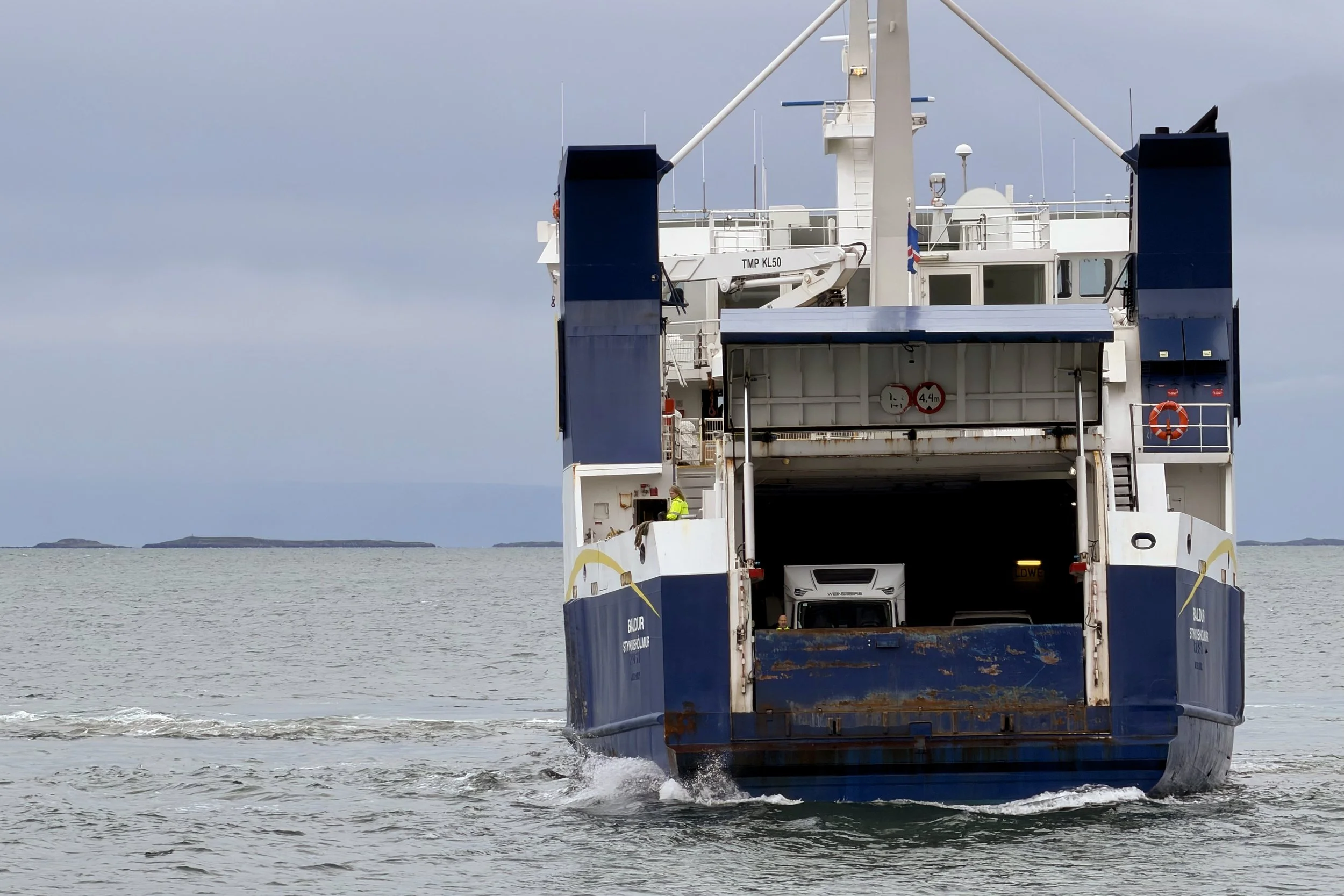
Stykkishólmur to Búðakirkja, 25 Aug 2026
On the last full day with our hiking group, we visited several sights in Snæfellsjökull National Park, including a waterfall, an old well, a volcano crater, a black sand beach, and basalt cliffs.
We had a relatively slow morning. Breakfast was at the usual time, but because we didn’t have to go as far today, we left a bit later than usual. It was windy during the night, but the wind died down to a breeze as we loaded into the vans.
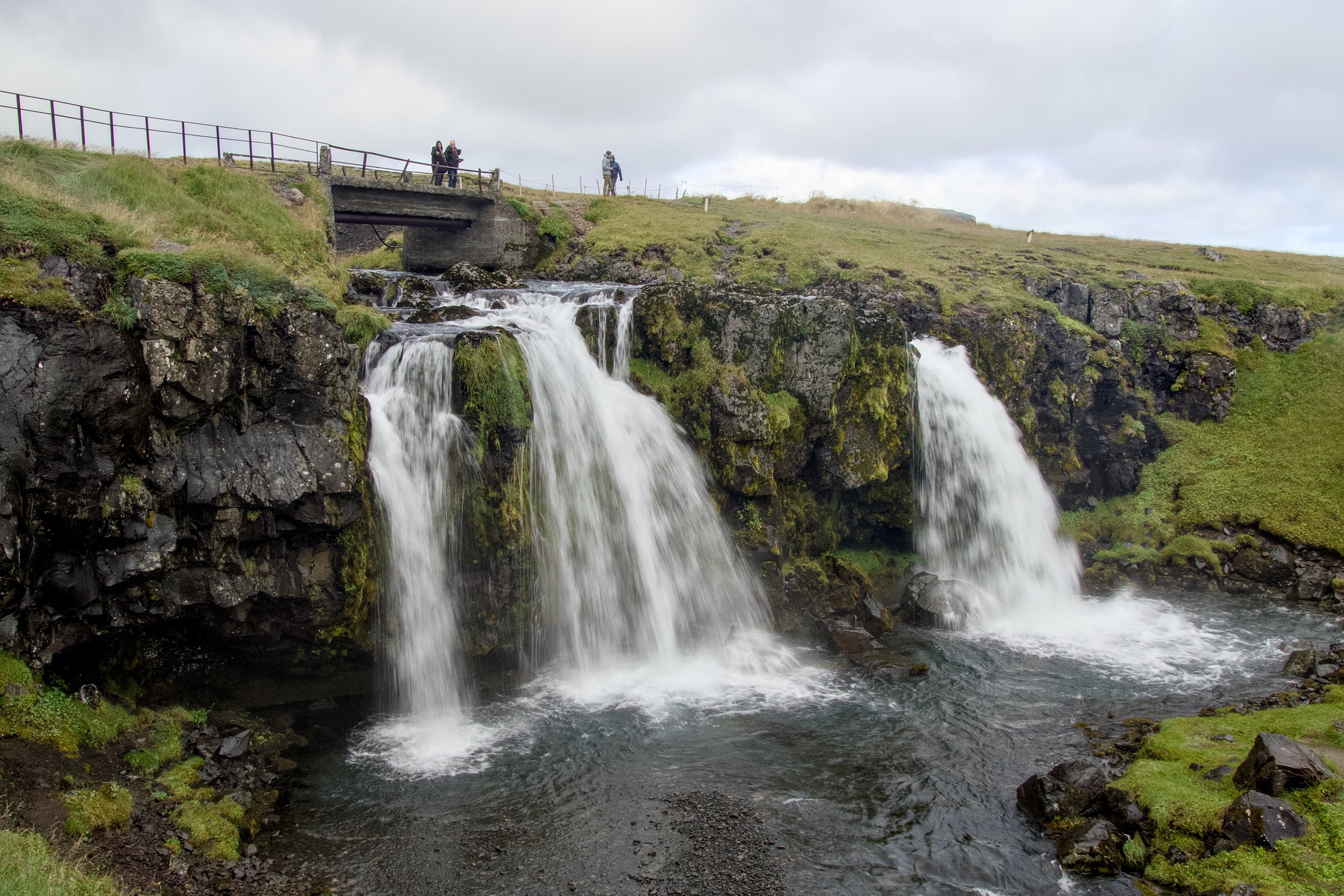
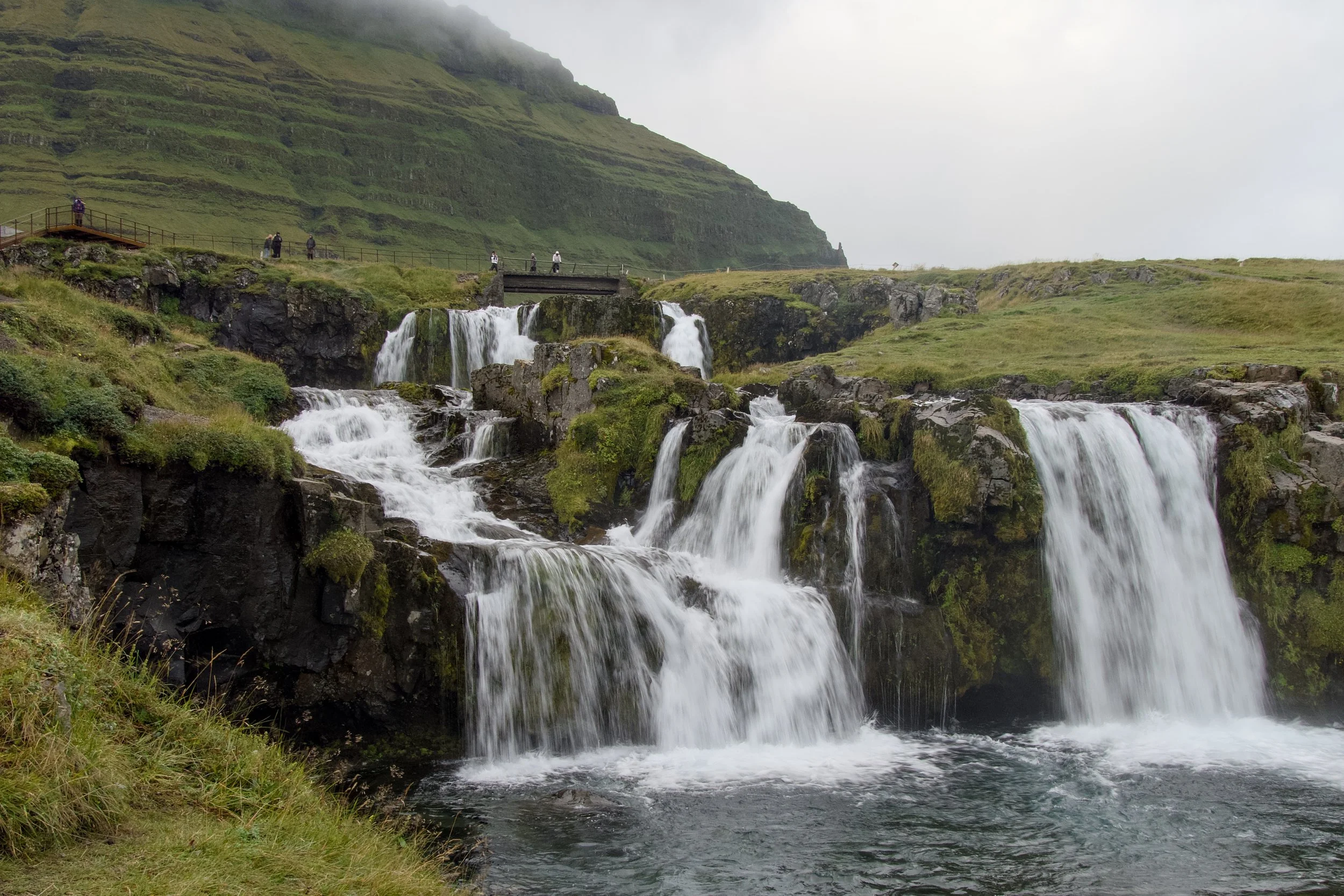
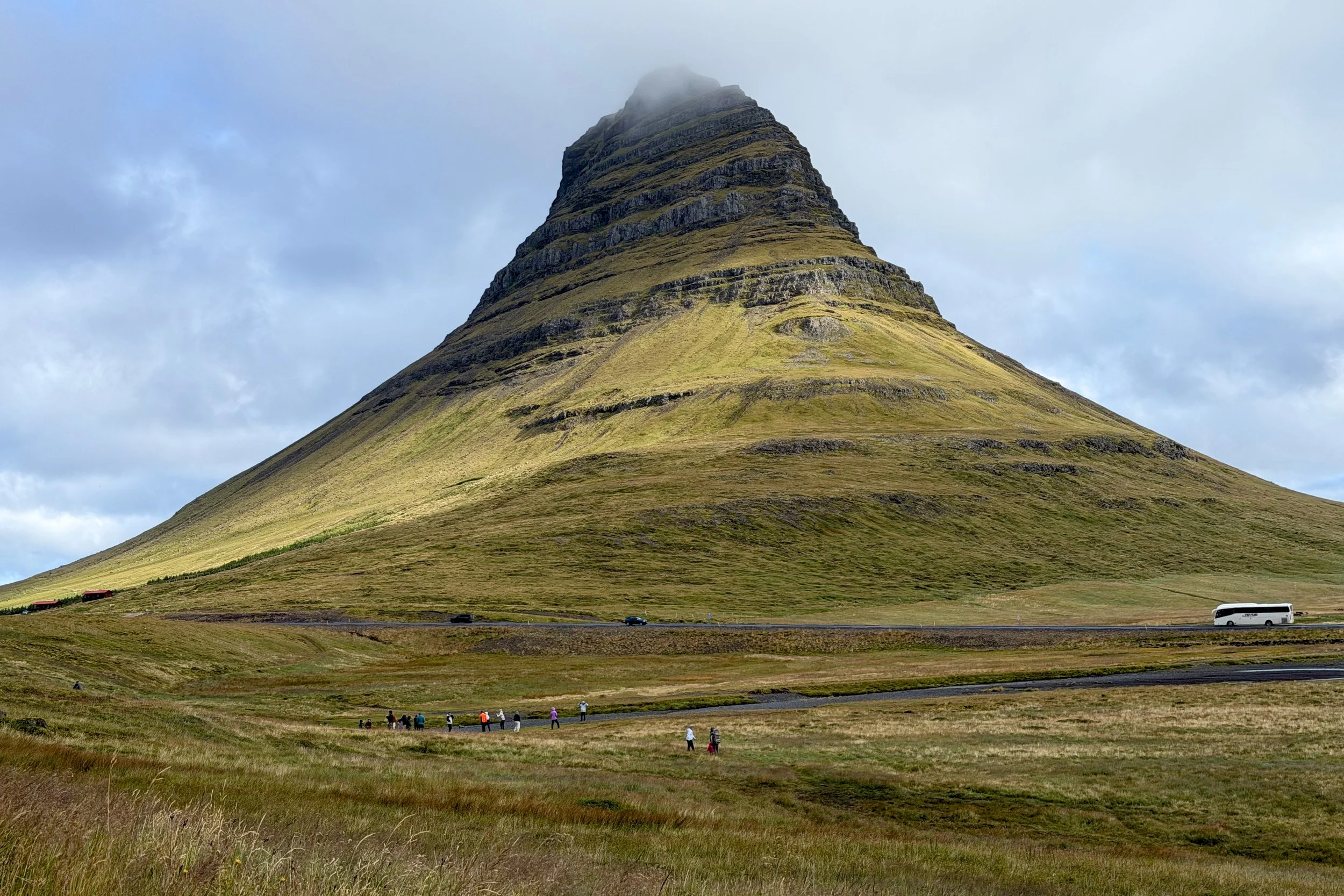
Our day would center around Snæfellsjökull National Park, which had a lot of variety of things to do along the route we were driving. The first stop was Kirkjufellsfoss, a relatively small waterfall which had two levels. After looking at that, we walked further along the path for a while to stretch our legs, then doubled back. We got a great view of the mountain Kirkjufell, which stands in the middle of flat land around it.
Our next stop was the visitor center where we took a look at the exhibits and had an early lunch. We also got some recommendations from the person behind the desk.
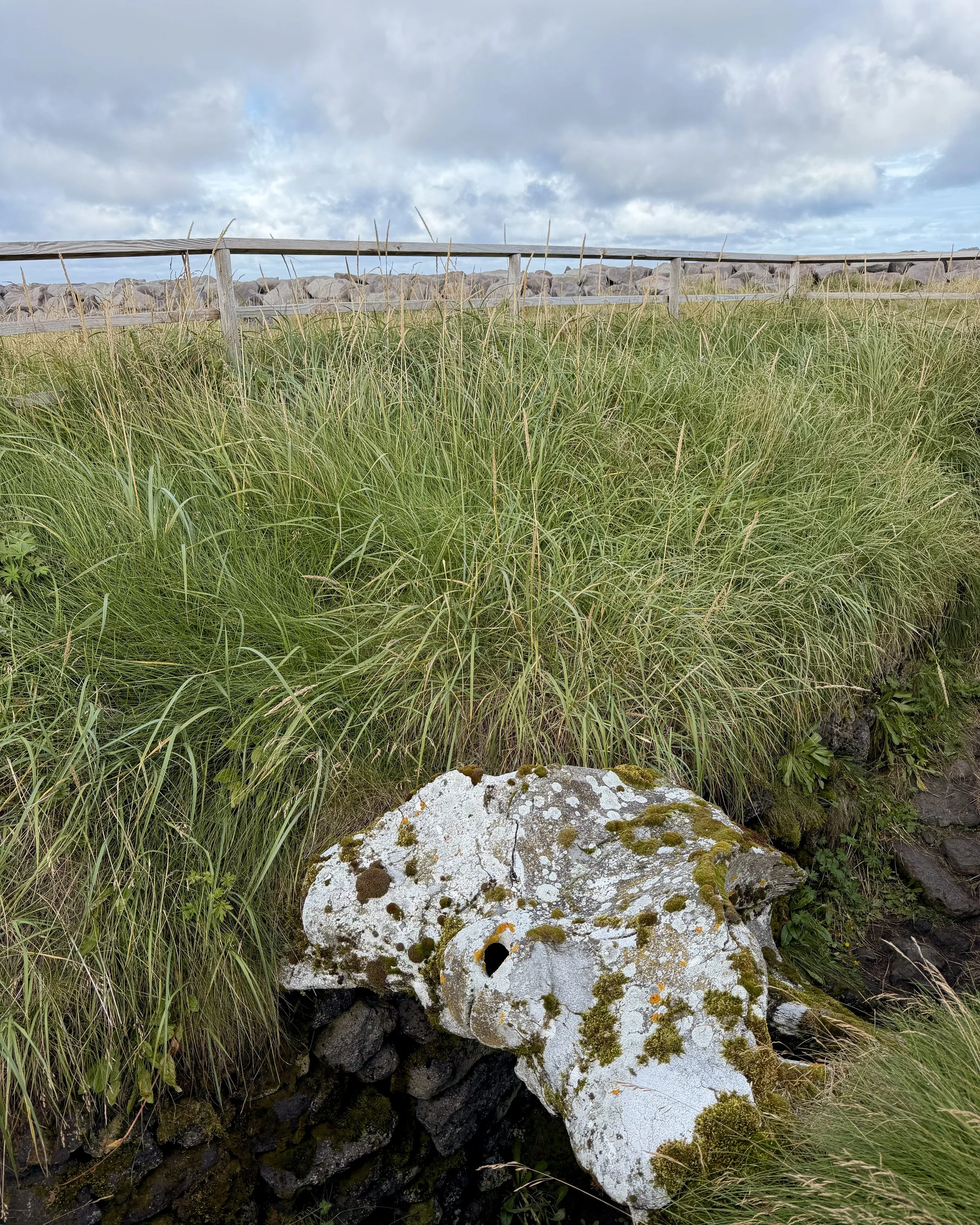
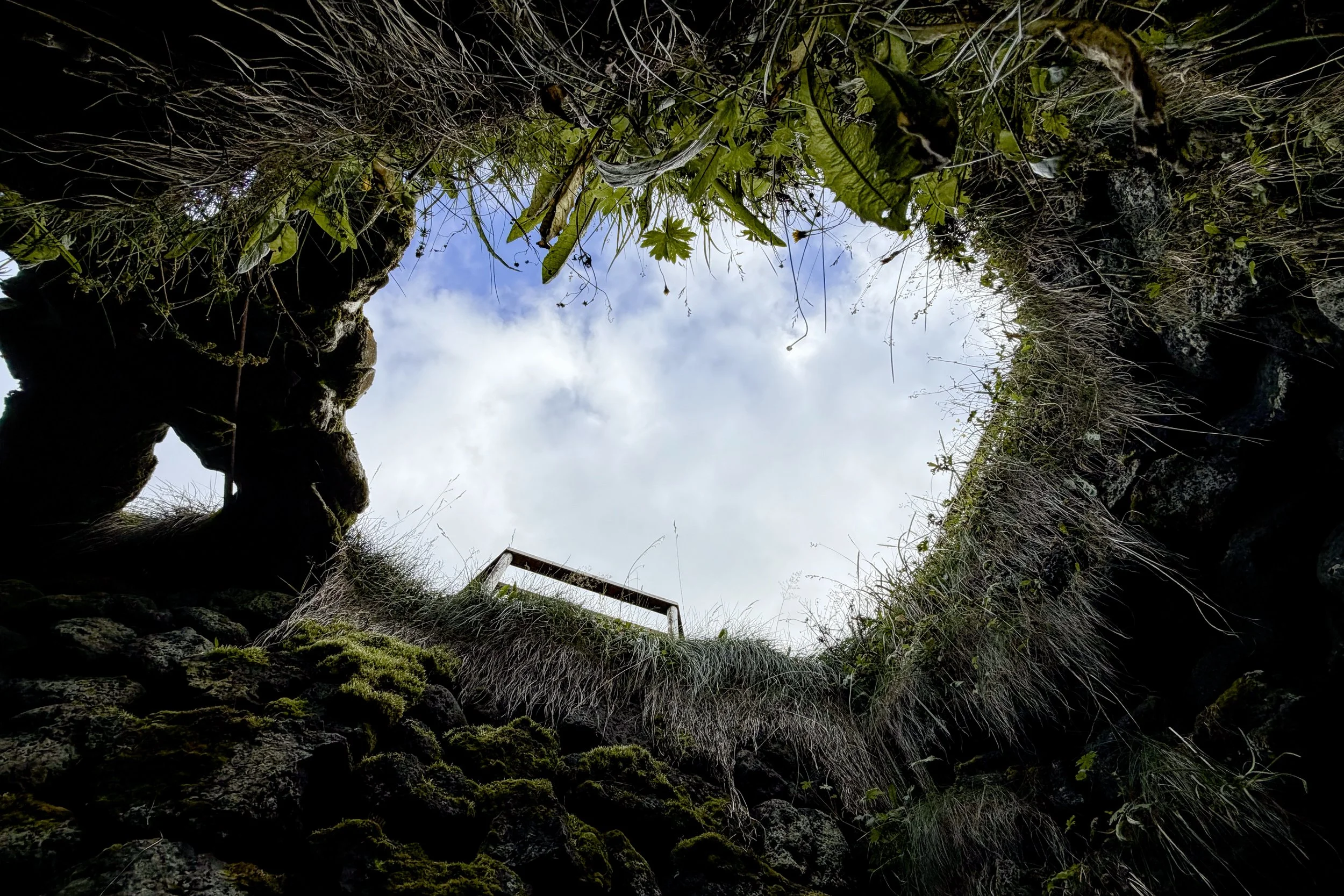
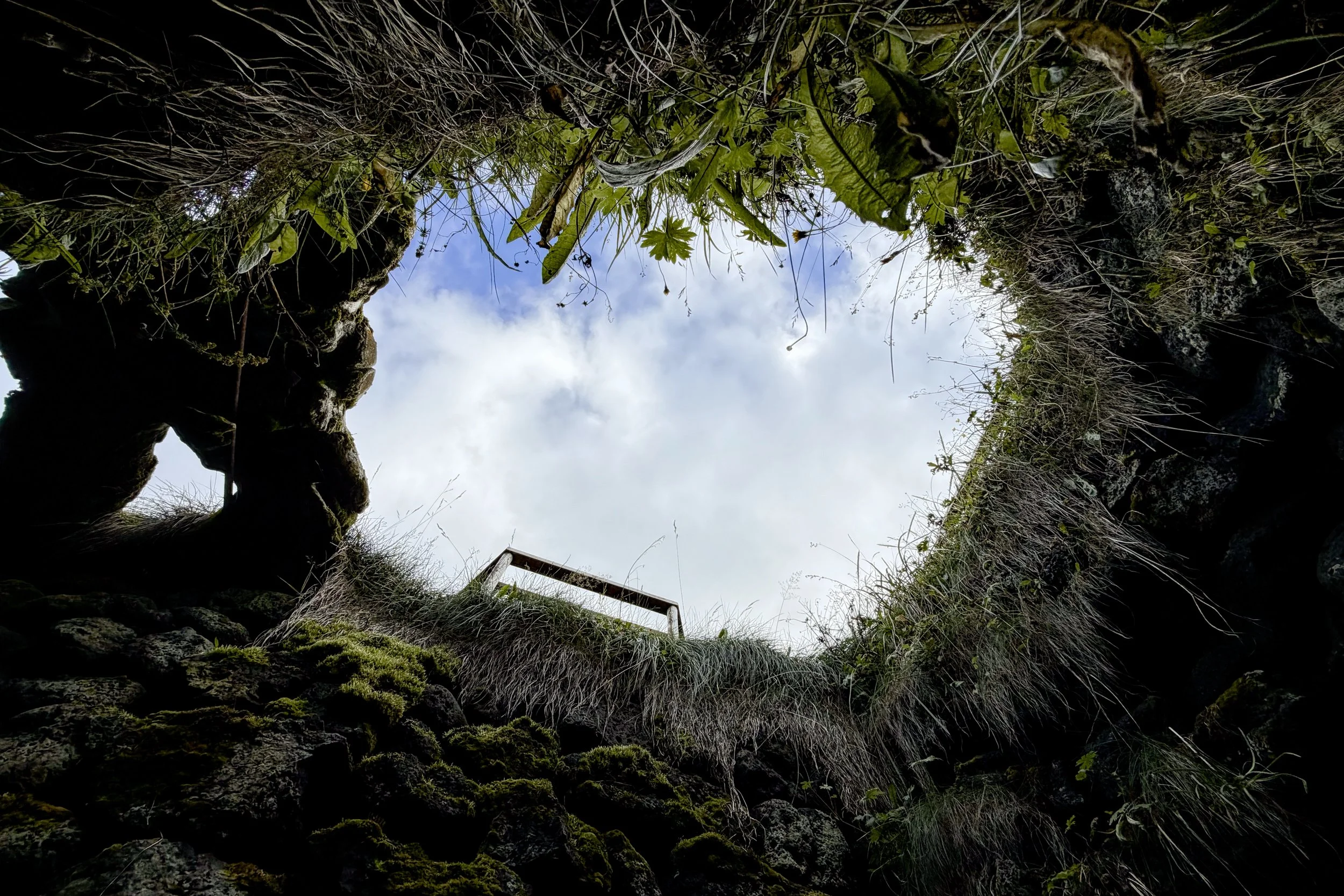
Next up was Gufuskálavör, an ancient fishing landing which was part of a busy fishing station in the 14th and 15th centuries. We then walked to Írskrabrunnur, the “Well of the Irish” which is a stone well which likely dates back to at least the 9th century. It was the main freshwater source for several farms for centuries. There is a large whalebone across the opening, and you can take steps down to the bottom of the well.
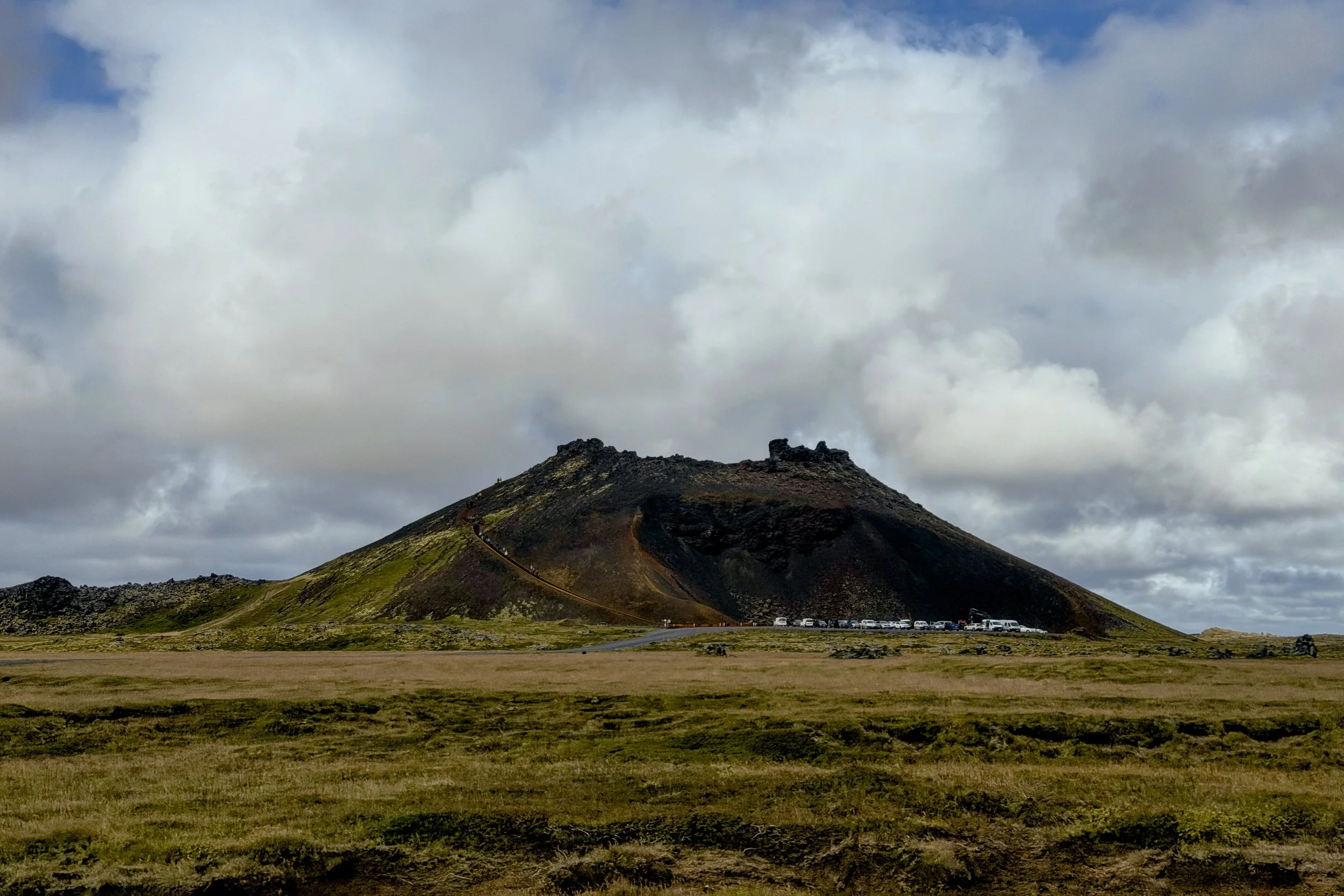
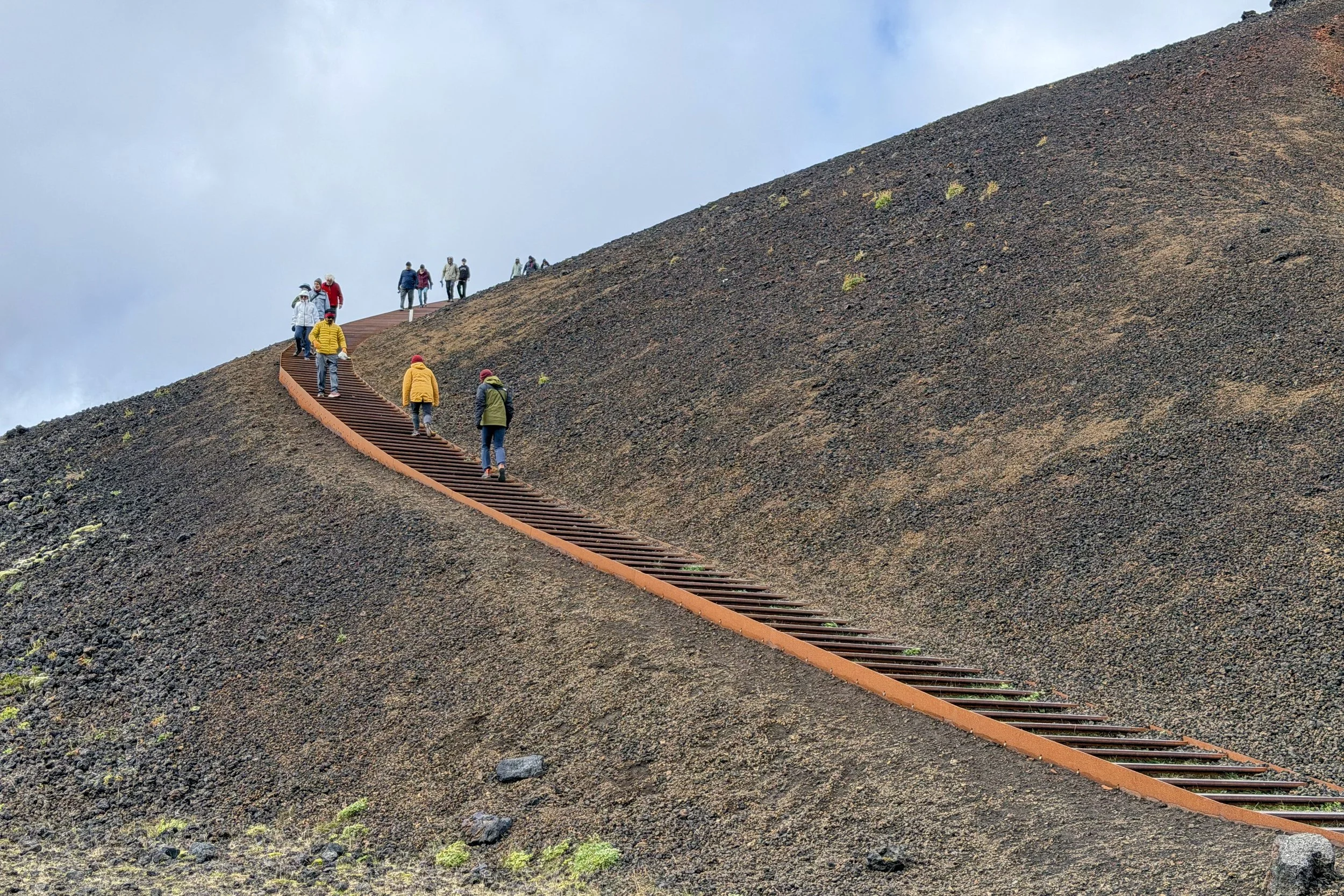
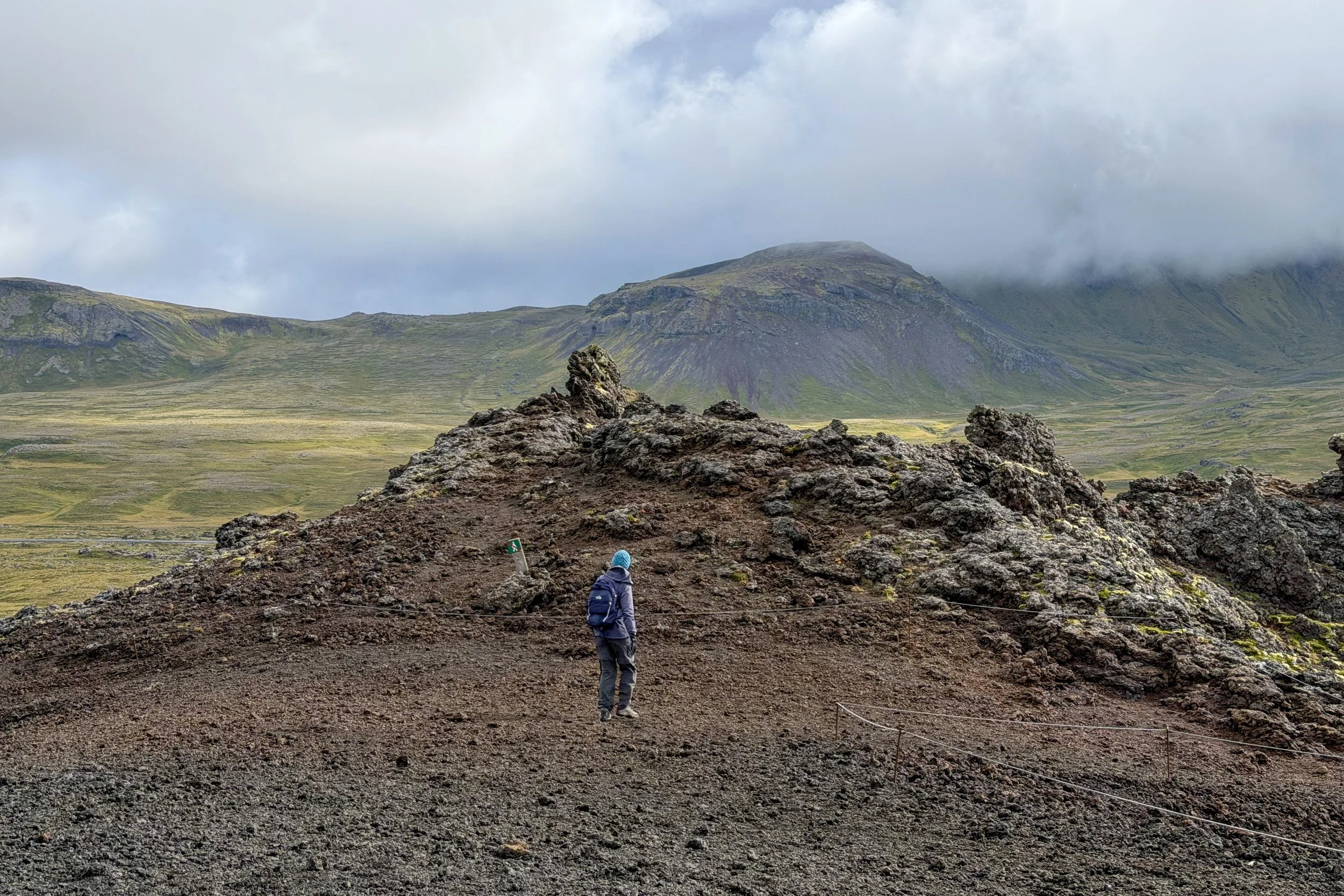
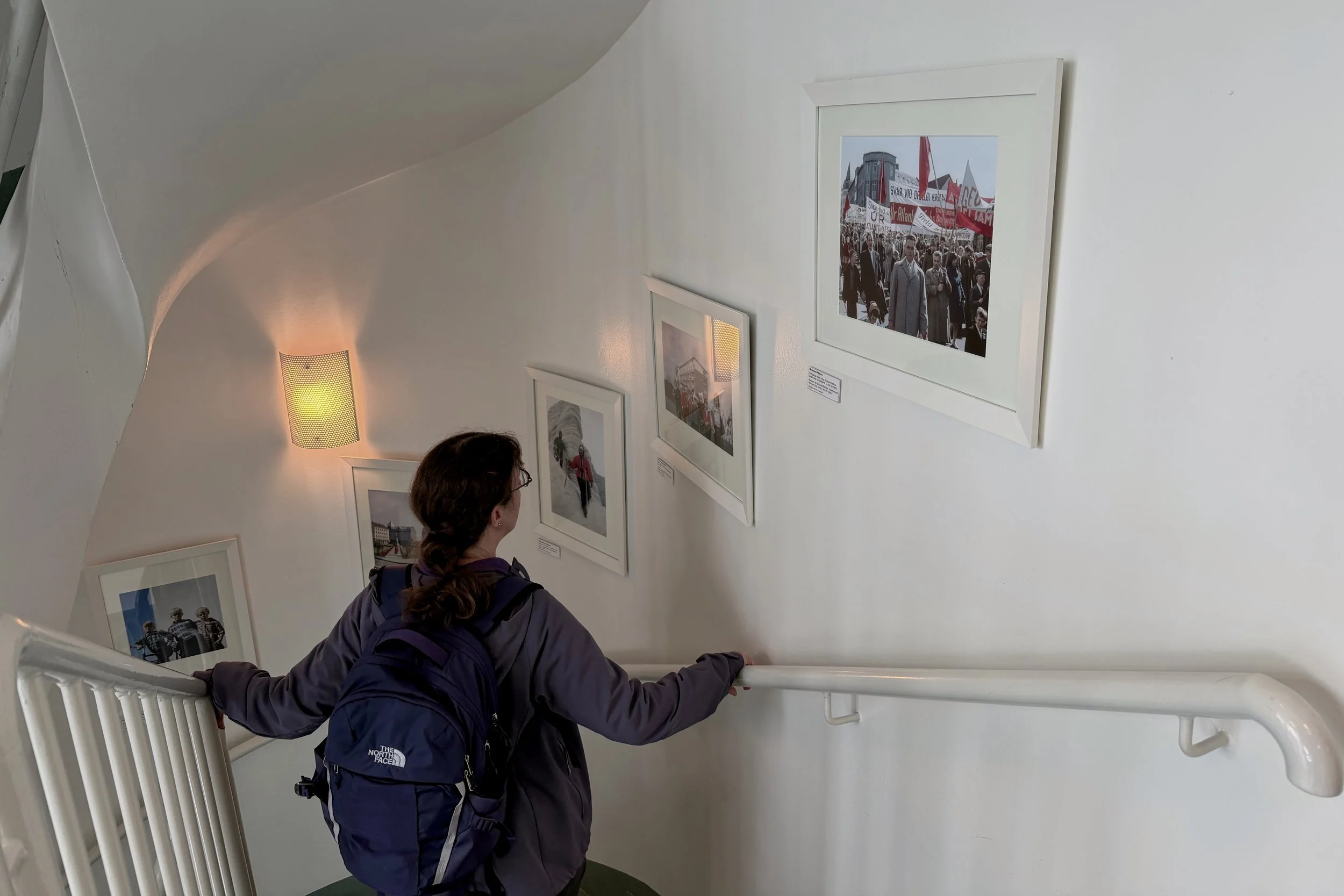
After walking back to the van, we proceeded to Saxhóll, a small volcanic crater which has a stairway spiraling around it to the top. It is a cinder cone which is probably 3,000 to 4,000 years old. We made it up to the Litli Saxhóll cone, which is as far as the path went. There is the larger Stóri Saxhóll cone which we didn’t see.
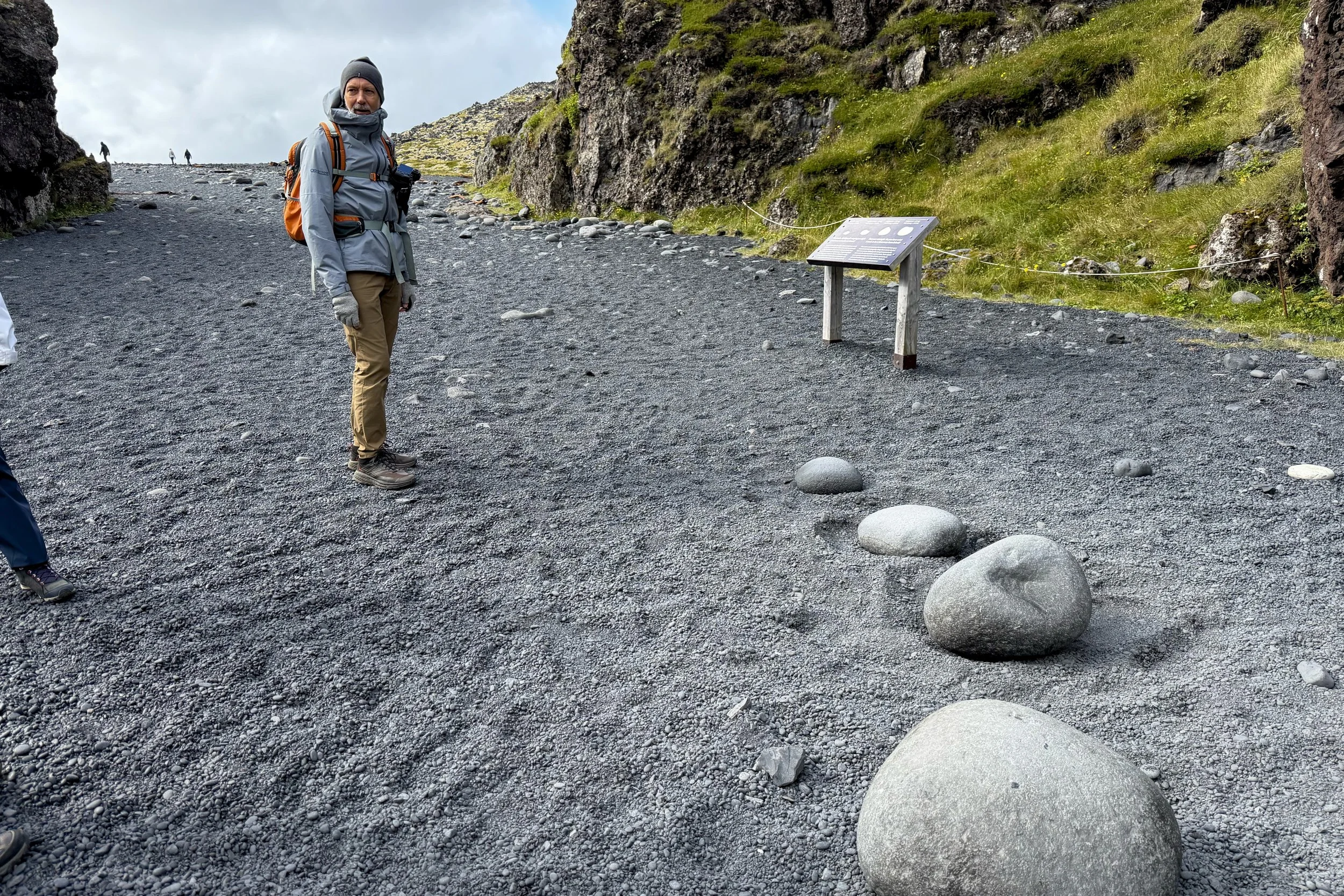
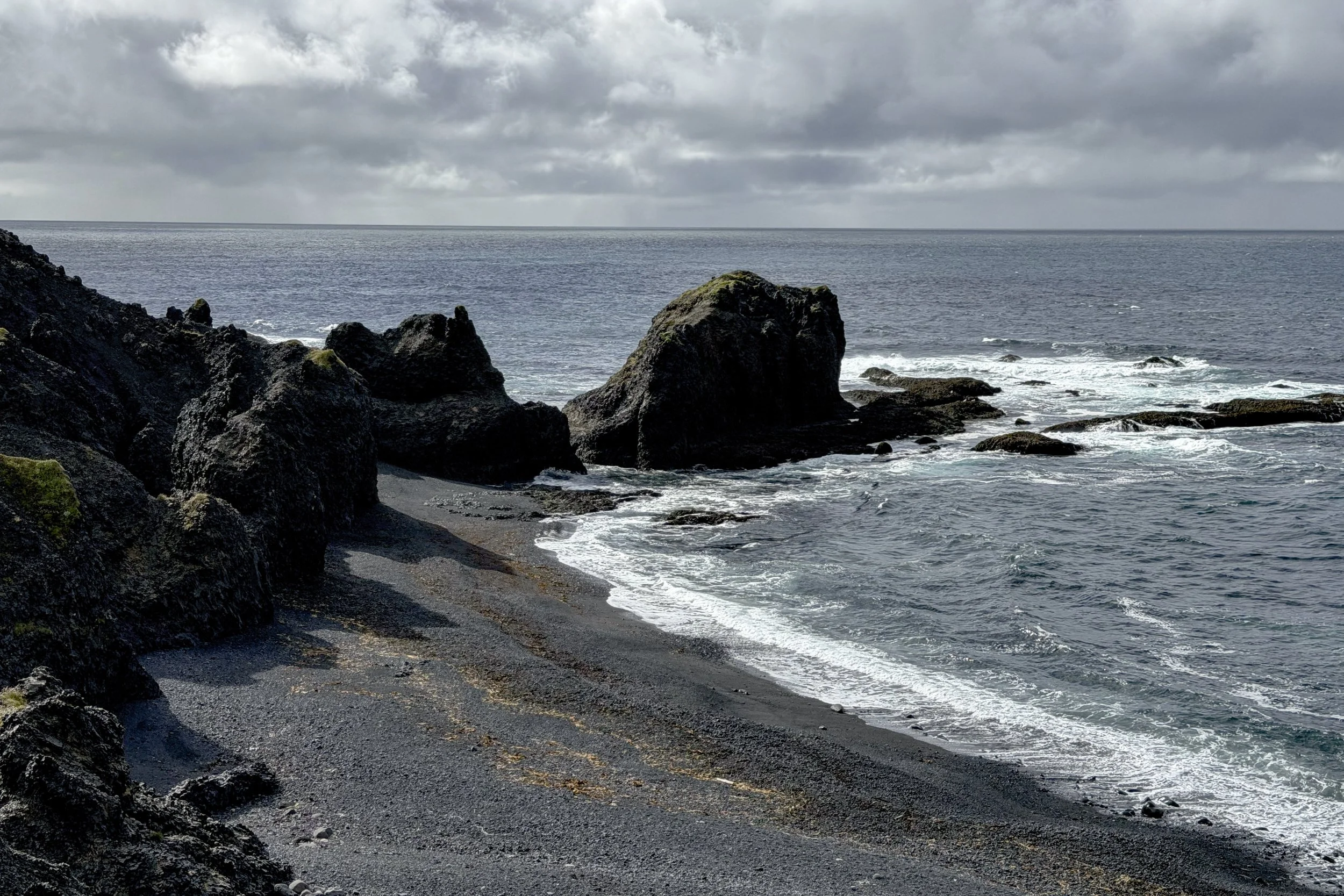
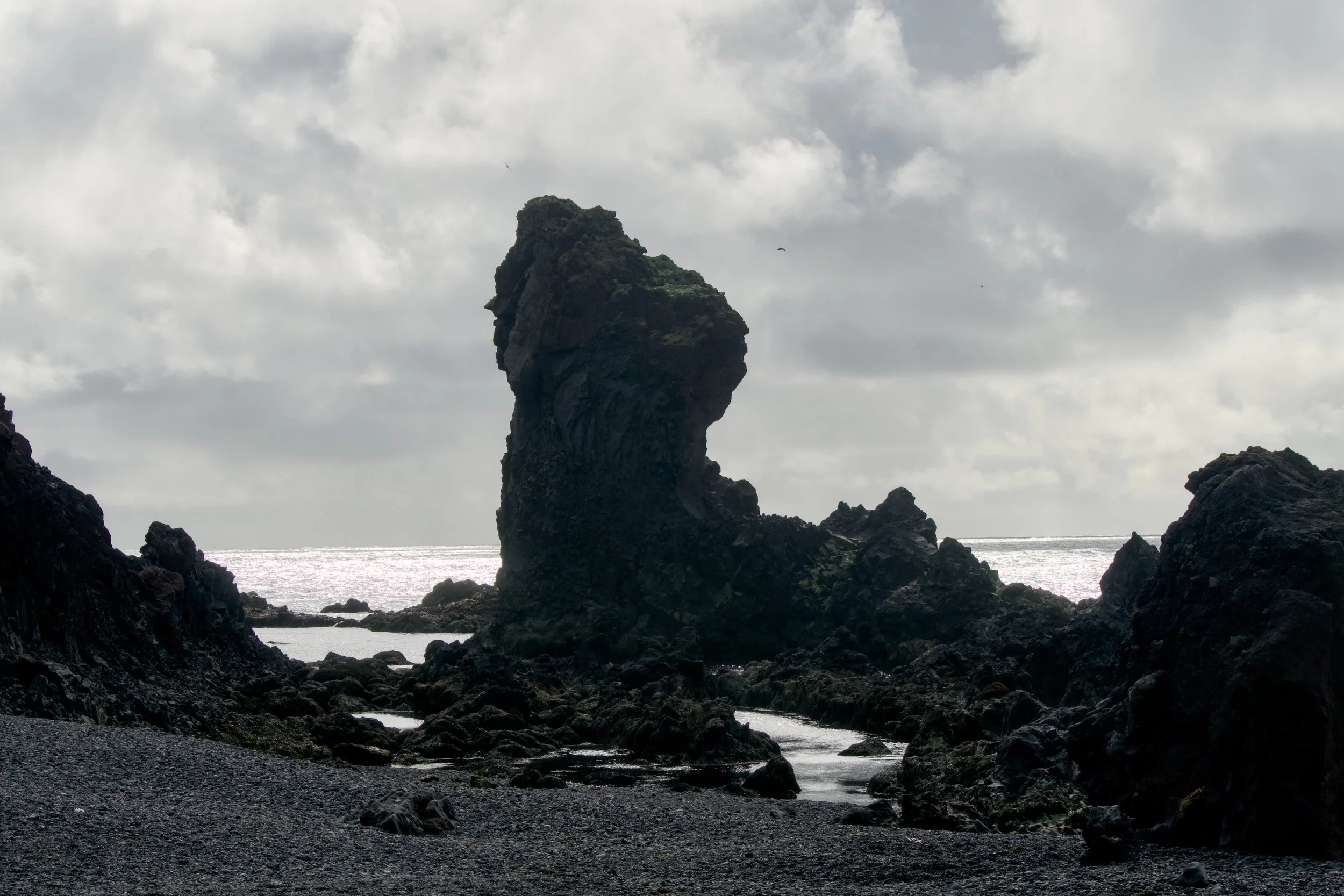
Next up was Djúpalónssandur, a black pebble beach which has large lava formations all around. When we started going towards the beach, we came across four lifting stones which were used to test the strength of prospective fishermen. The stones were listed as Amlóði (“useless”, 50 lb), Hálfdrættingur (“weakling”, 120 lb), Hálfsterkur (“half‑strong”, 220 lb, the minimum when lifted to waist height), and Fullsterkur (“full‑strong”, 340 lb). Pretty humbling.
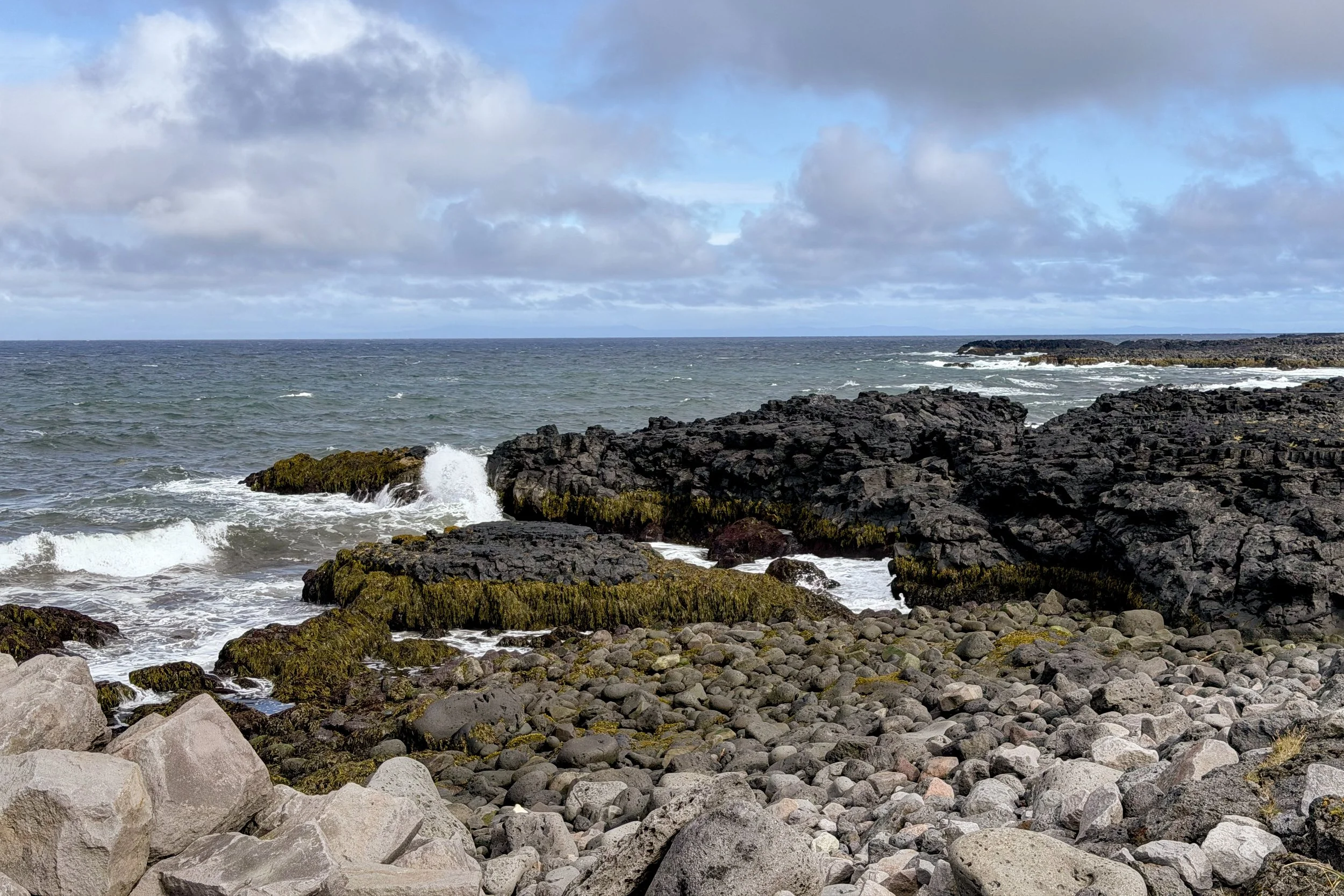
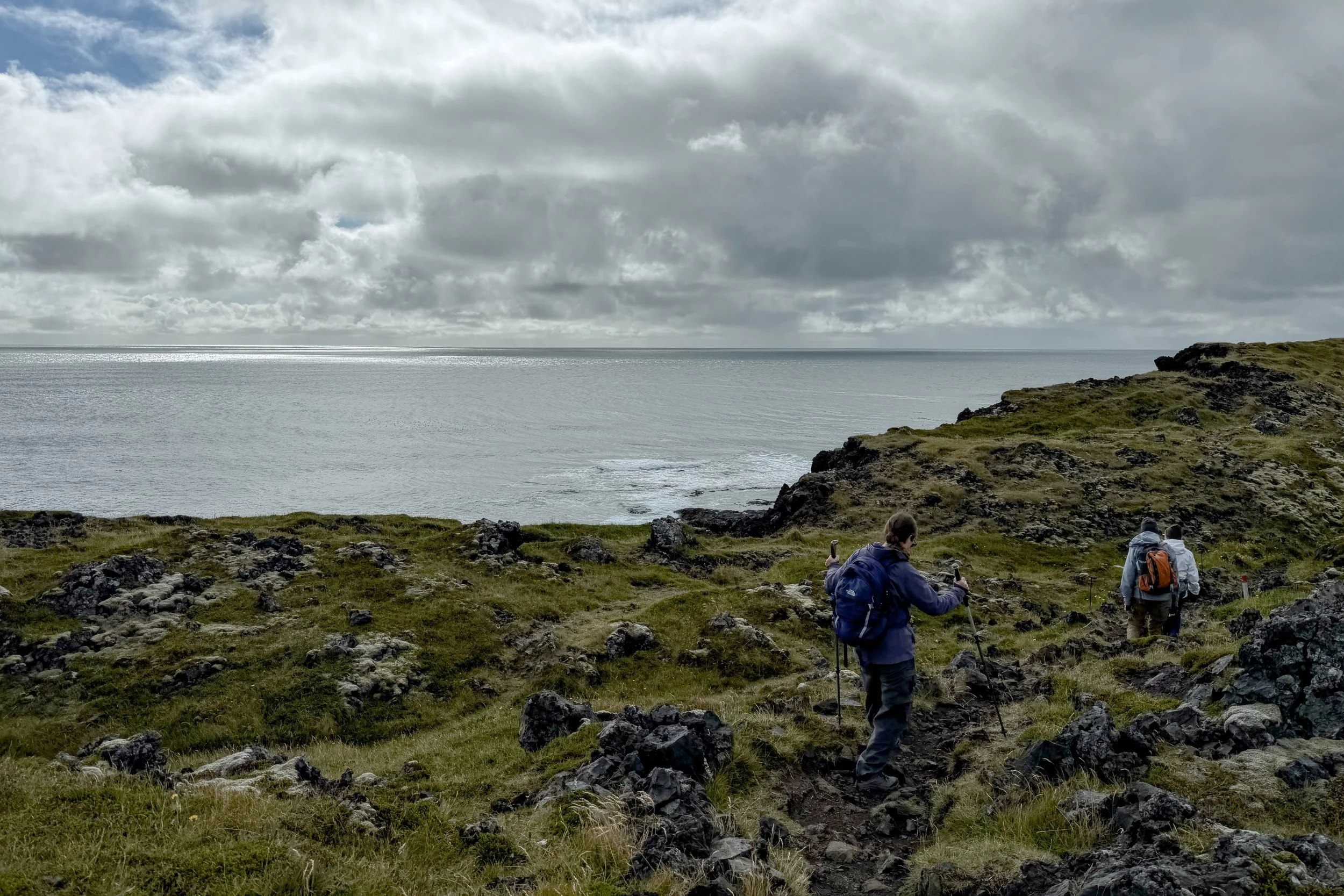
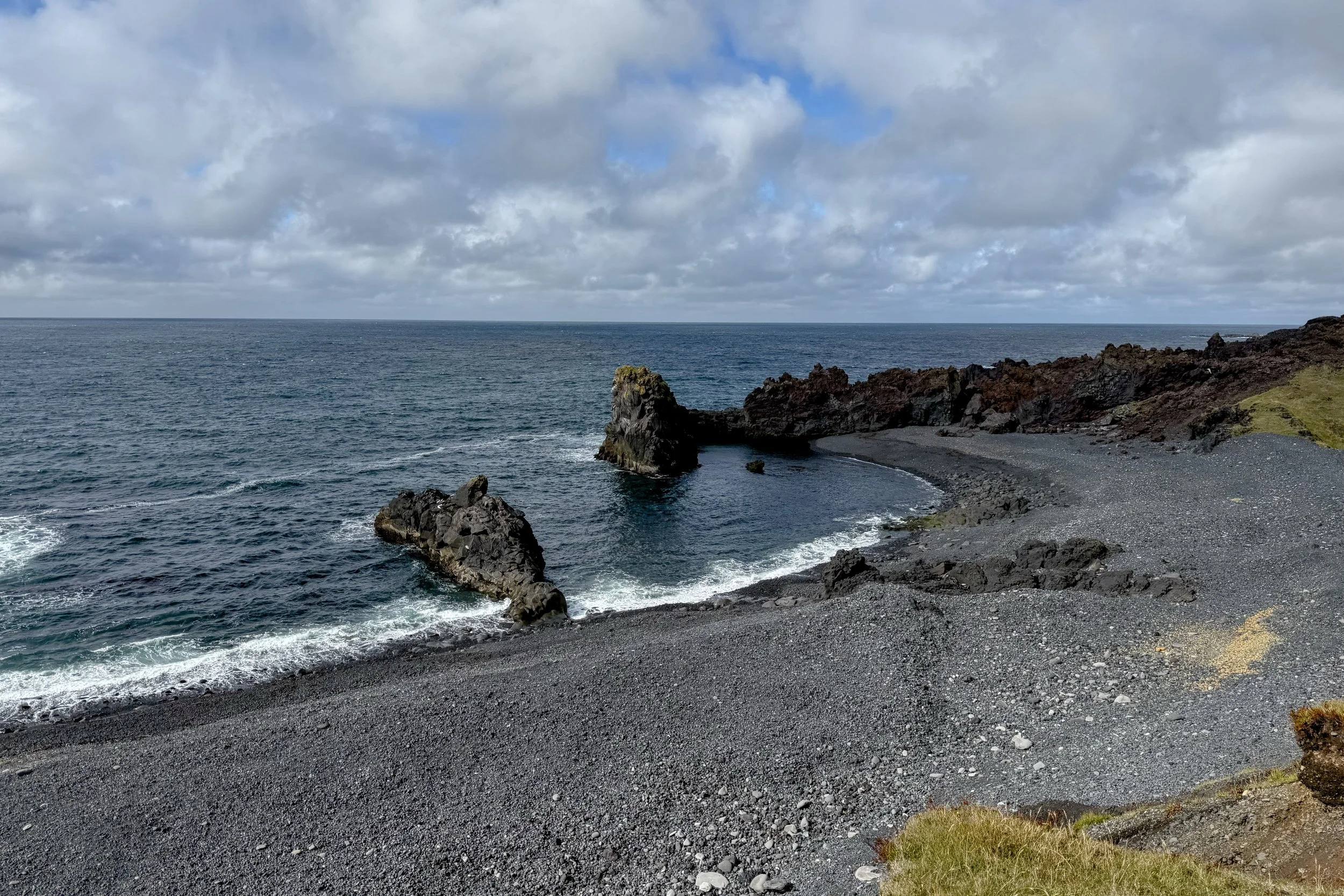
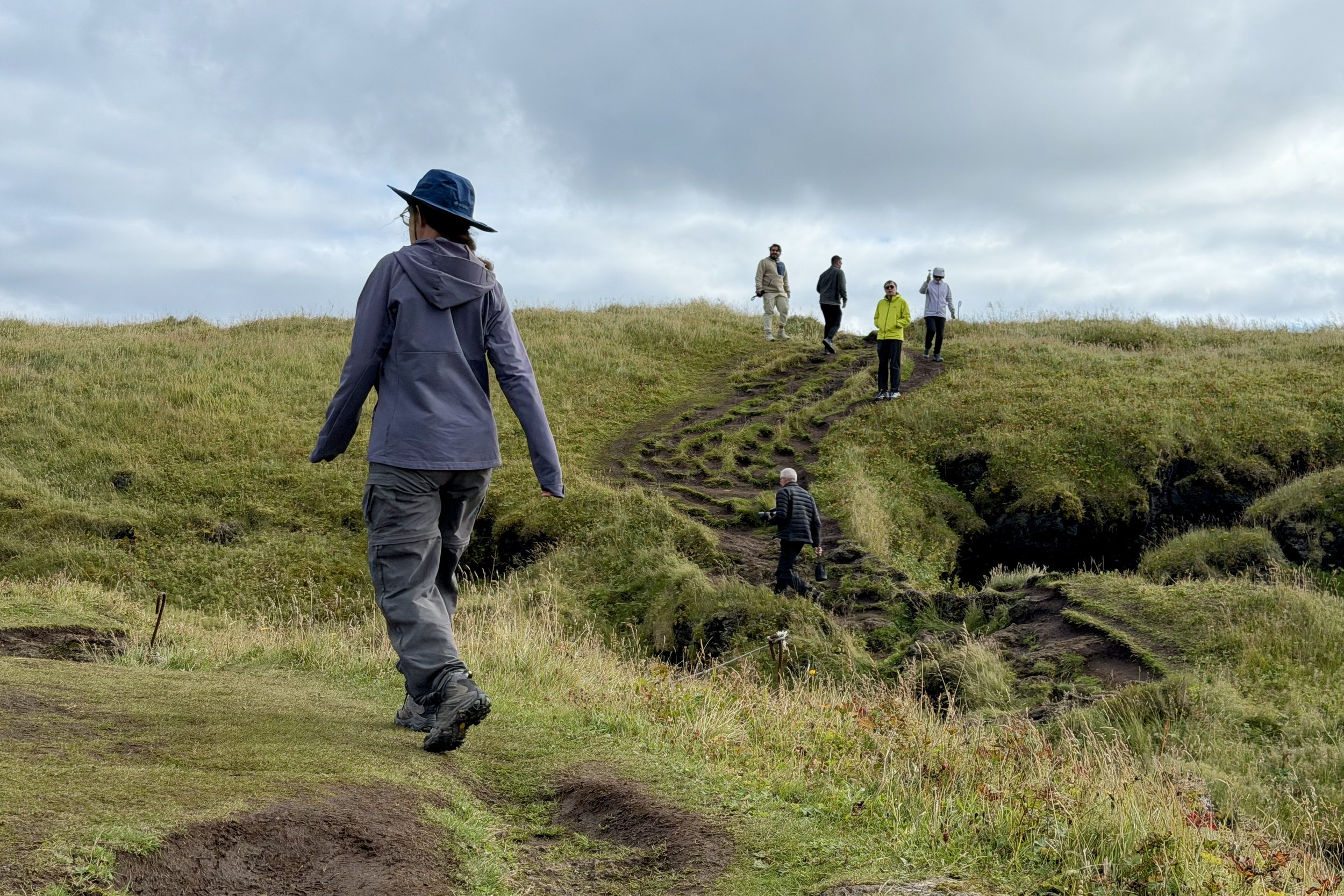
Strewn along part of the beach were pieces of the British trawler Epine GY7 from Grimsby, which ran aground in 1948. We hiked along the top of the cliffs for a while until we came up on a completely different cove which had dramatic formations. We returned then went down to the beach before heading back.
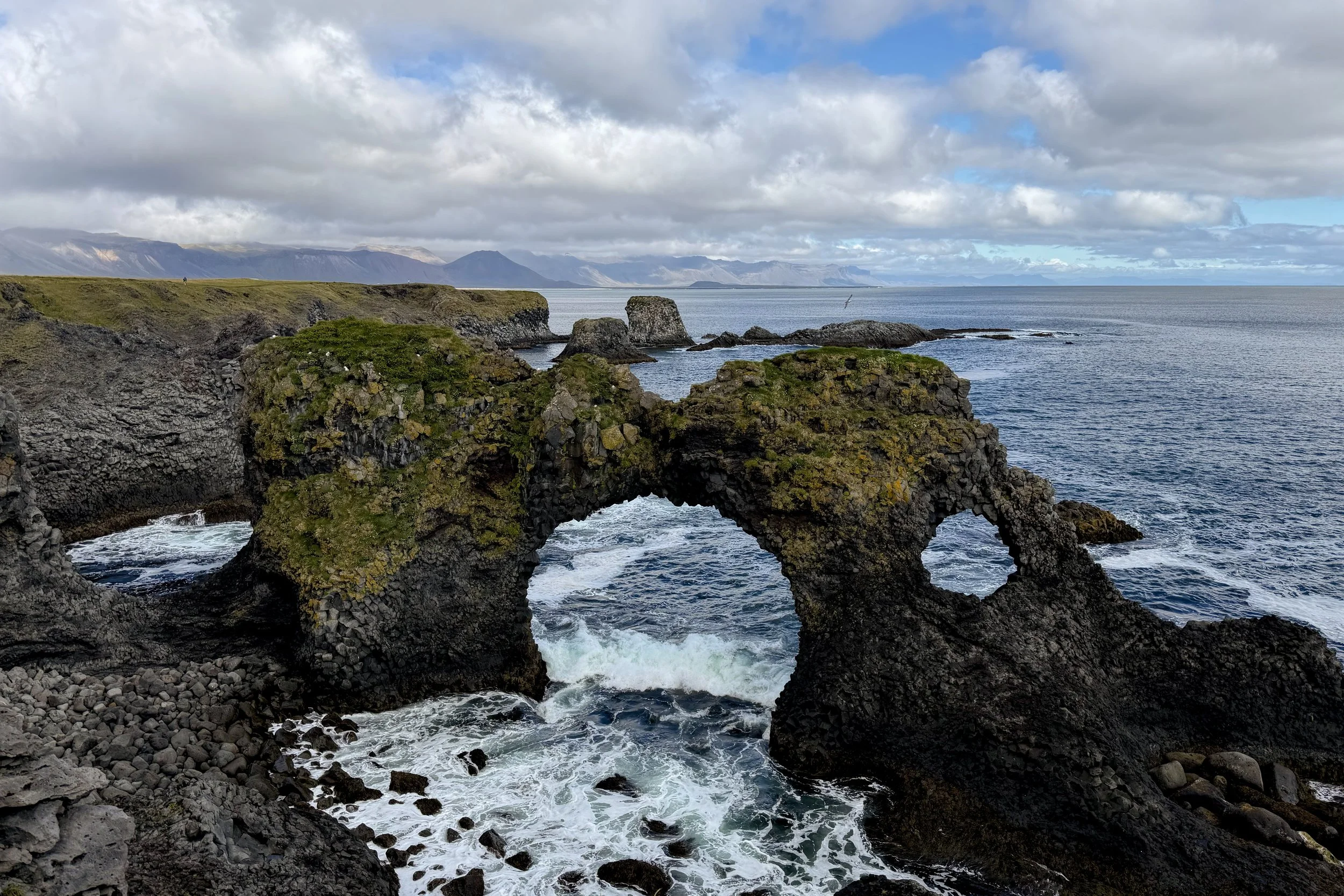
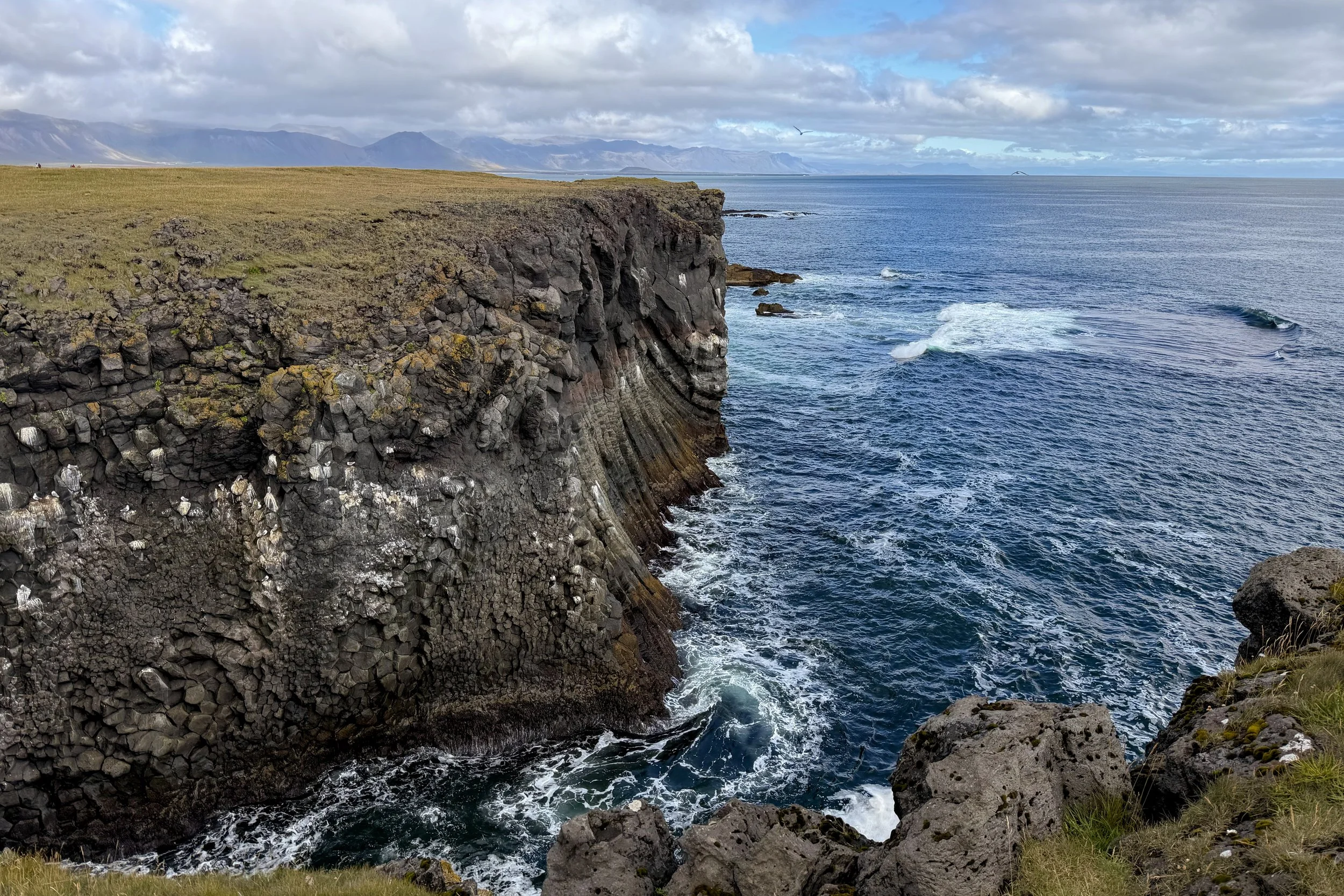
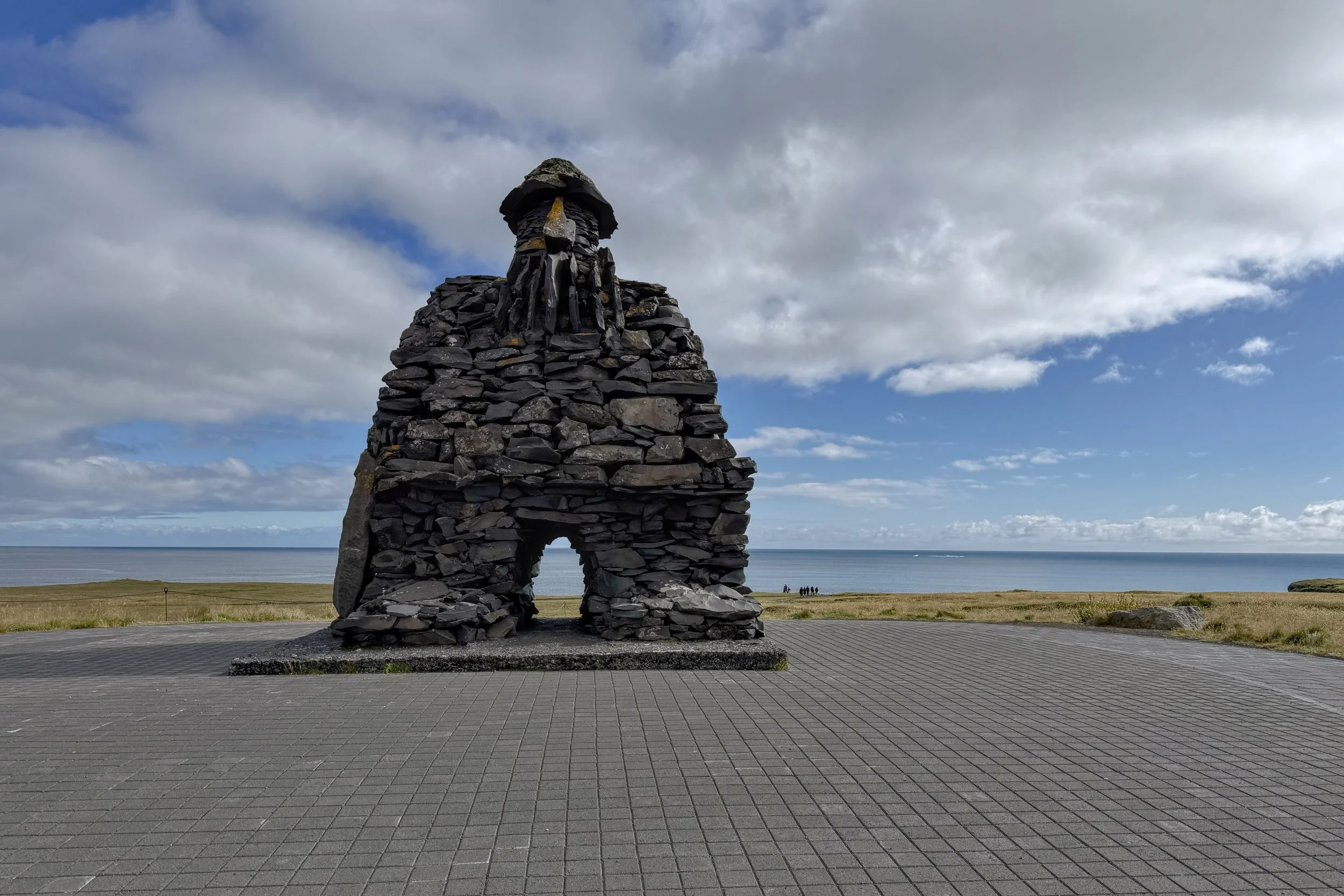
The last stop was the Arnarstapi Cliffs which were made of dark basalt. In the water was Gatklettur, a basalt arch, as well as columnar basalt cliffs. At a high point of the trails was a sculpture of Bárður Snæfellsás, a half‑giant, half‑human settler who disappeared into the Snæfellsjökull glacier, and is now considered a guardian spirit for locals.
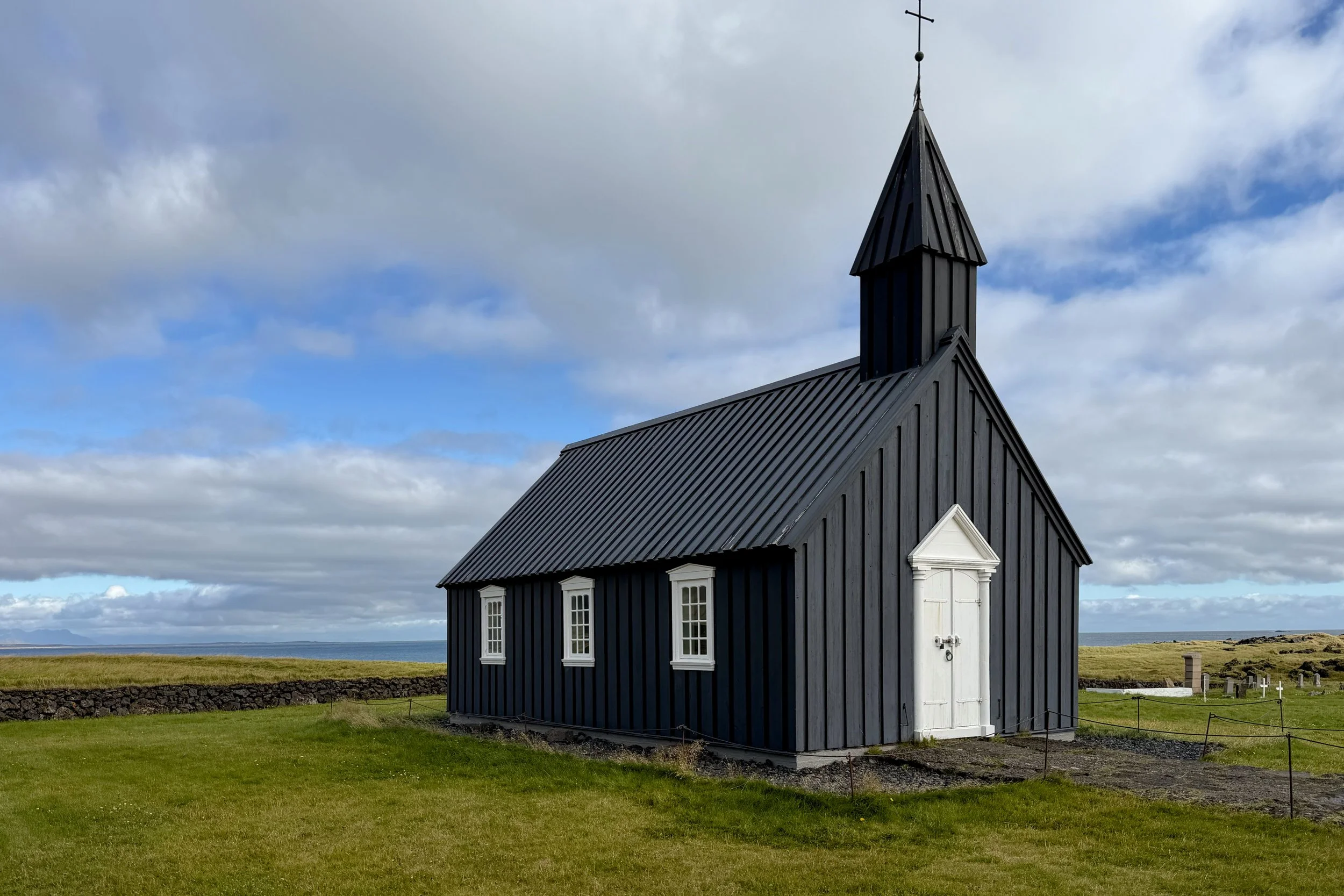
We then drove a short distance to our hotel in Búðir. After unpacking a bit, we went out to look at Búðakirkja, a black church which was nearby. The color comes from the tar used to protect the wood. A church has been on this site since the early 1700s, with the current one being built in 1848 then renovated and slightly moved in the 1980s.
After we got back, all of us gathered for a celebratory last dinner, with people lingering before we went to our rooms.